How Cantonal Licensing Shapes Thematic Slot Content Variations in Switzerland's Regulated Digital Venues
Iris Lange · Nov 1, 2026

How Cantonal Licensing Shapes Thematic Slot Content Variations in Switzerland's Regulated Digital Venues
Switzerland maintains a dual-layer system where federal legislation sets baseline standards for gambling activities while cantons handle licensing for both physical and digital venues, and this structure directly influences the thematic elements permitted in slot games across regulated platforms. Different cantons apply distinct criteria during the approval process which leads providers to adjust symbols, narratives, and visual motifs to secure access in each jurisdiction.
Federal Foundations Meet Cantonal Implementation
The Federal Act on Gambling establishes core prohibitions against themes involving violence, religious figures, or political content yet leaves room for cantons to interpret and expand these rules when granting licenses to online operators. Cantons such as Geneva and Zurich maintain additional review panels that examine proposed game libraries before operators can offer them to local players, and these panels often require modifications to storylines that reference historical events tied to specific regions. Data from the Swiss Federal Gaming Board shows that operators submit thematic dossiers for each canton separately which creates a patchwork of approved content variations rather than a uniform national catalog.
Regional Differences in Approved Themes
Operators report that cantons with strong tourism sectors tend to favor themes centered on alpine landscapes, watchmaking traditions, and folk festivals while more urban cantons accept broader ranges of fantasy or adventure motifs provided they avoid prohibited categories. One study conducted by the University of St. Gallen examined license applications between 2022 and 2025 and found that providers altered character designs in over 40 percent of titles to replace generic medieval knights with neutral explorers when targeting certain eastern cantons. These adjustments occur because licensing boards in each canton evaluate cultural sensitivity independently even when federal guidelines remain consistent nationwide.
Providers must navigate these variations by maintaining multiple versions of the same base game and this approach increases development costs while allowing access to the full Swiss market. The reality is that a single slot title might feature chocolate-making symbols in western cantons yet switch to abstract geometric patterns in central regions to meet local expectations during the approval phase.
Provider Strategies and Content Customization
Game developers track cantonal decisions through ongoing consultations with legal teams in each region and they adjust reel symbols, background art, and bonus round narratives accordingly before submitting final builds. Research from the European Gaming Institute indicates that such localization efforts have grown since the expansion of licensed online platforms and operators now allocate dedicated teams to monitor updates in cantonal requirements. By November 2026 several cantons plan to introduce digital submission portals for thematic reviews which could streamline the process yet still preserve individual cantonal authority over final approvals.
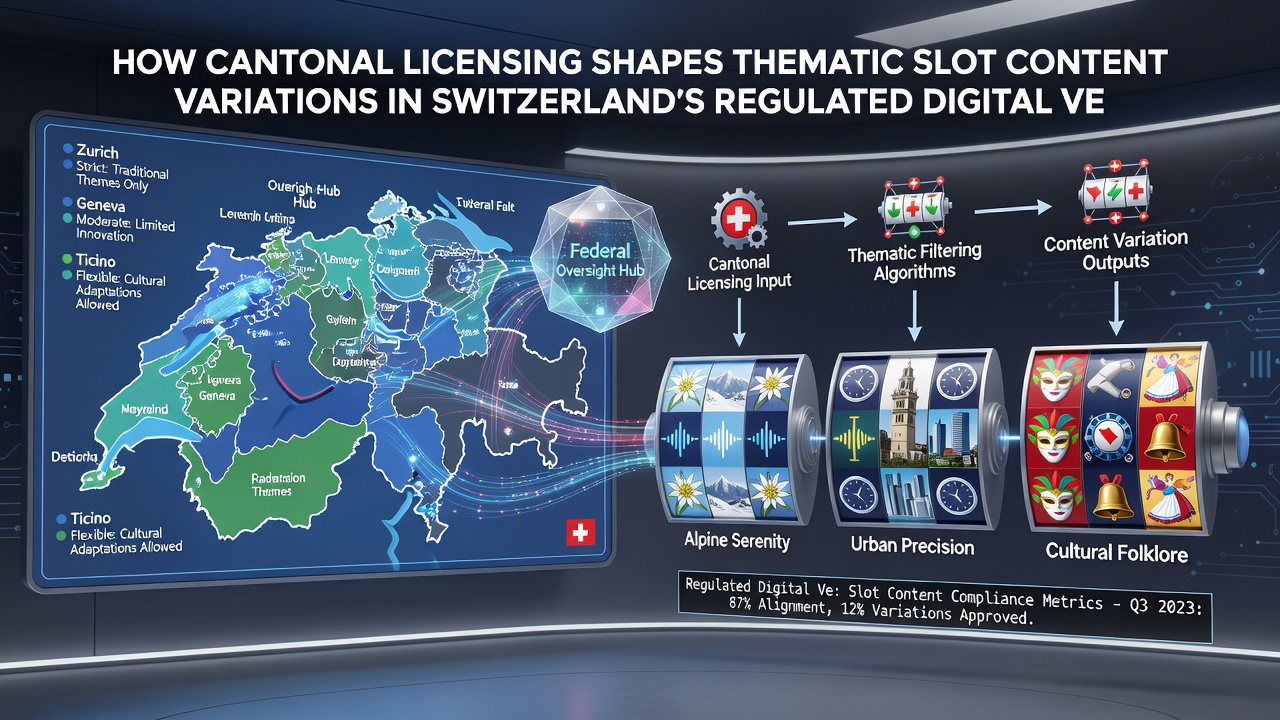
Take the case of a popular fruit-themed slot that underwent revisions in two adjacent cantons: one board requested removal of any references to fermented beverages while the neighboring jurisdiction accepted the original design without changes. Such outcomes demonstrate how licensing decisions shape content at a granular level and force providers to prepare flexible asset libraries that can be swapped based on the target canton.
Effects on Player Experience and Market Access
Players accessing regulated platforms notice that available titles vary depending on their registered canton and this fragmentation results from the licensing process rather than operator preference. Figures released by the Swiss Lottery and Gambling Association reveal that platforms licensed across multiple cantons maintain separate game catalogs to comply with each set of conditions which limits cross-cantonal uniformity. Those who study these patterns observe that providers prioritize themes with broad neutral appeal such as nature or technology to minimize the need for extensive revisions during approval cycles.
External industry reports from the Canadian Centre for Gaming Research further highlight how decentralized licensing systems like Switzerland's encourage modular game design where core mechanics stay fixed while visual and narrative layers change to satisfy regional authorities. This modular method allows operators to respond quickly when a canton updates its guidelines without rebuilding entire titles from scratch.
Conclusion
Cantonal licensing continues to drive distinct thematic variations in Swiss slot content as operators adapt to localized approval standards within the federal framework. The process requires ongoing coordination between developers and regional regulators and produces a diverse yet controlled selection of games across digital venues. As submission systems evolve by late 2026 the fundamental role of cantons in shaping acceptable themes is expected to remain central to Switzerland's regulated gambling environment.