Swiss Oversight Directing Game Developer Tactics for Mobile Progressive Bonus Triggers and Player Safeguards
Erik Coleman · Oct 18, 2026
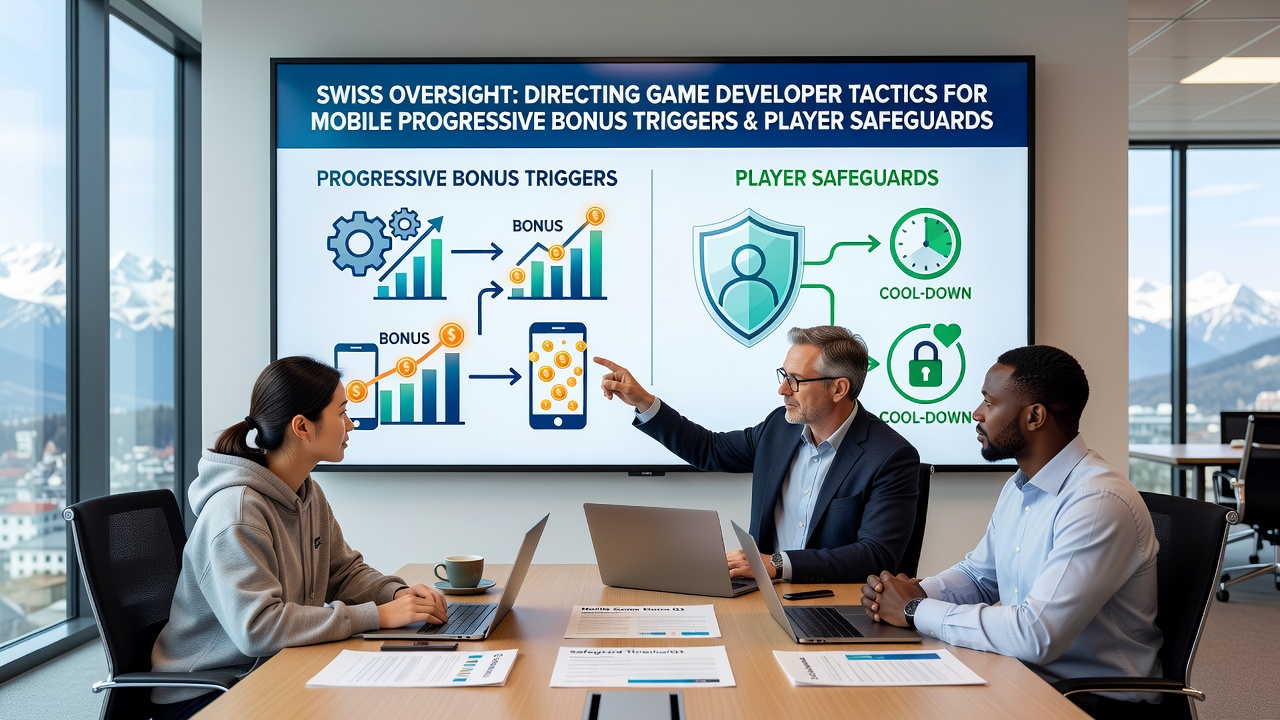
Swiss Oversight Directing Game Developer Tactics for Mobile Progressive Bonus Triggers and Player Safeguards
Swiss authorities maintain strict controls over mobile gaming platforms that feature progressive bonus mechanisms, and these rules push developers to adjust trigger algorithms and integration methods accordingly. Regulations require transparent randomization processes for bonus activations while mandating built-in tools that help limit excessive play sessions, and developers respond by embedding compliance features directly into game code before launch.
Regulatory Framework and Developer Adaptations
Observers note that the Eidgenössische Spielbankenkommission sets clear parameters around how progressive jackpots accumulate and release in mobile environments, which forces studios to recalibrate payout frequencies and eligibility criteria to meet licensing standards. Data from compliance reviews shows that developers now incorporate real-time monitoring scripts that flag unusual trigger patterns, and these adjustments help align products with federal expectations on fairness. What's interesting is how mobile-specific constraints, such as touch interface limitations and data usage considerations, intersect with these oversight requirements to shape coding decisions.
Studies conducted across European jurisdictions indicate that Swiss rules emphasize player protection layers more than some neighboring systems, and this emphasis leads developers to integrate session timers alongside progressive bonus logic. Those who've examined recent submissions find that game providers test trigger events under simulated regulatory audits, and the results often require revisions to ensure safeguards activate before bonus rounds escalate stakes. And the process continues with ongoing feedback loops between regulators and technical teams.
Mechanics of Progressive Bonus Triggers Under Oversight
Progressive bonus triggers in mobile slots must follow predefined mathematical models that Swiss oversight bodies review for randomness and accessibility, while developers embed these models into client-server architectures to prevent manipulation. Research indicates that trigger thresholds now include variable contribution rates from different bet sizes, and this structure distributes jackpot growth more evenly across player bases. Figures from industry audits reveal that mobile platforms licensed in Switzerland updated their bonus engines in October 2026 to include additional verification steps that confirm player eligibility before any progressive meter advances.
Developers adjust code to handle network interruptions gracefully, since mobile connections can drop mid-trigger, and regulatory guidelines require preserved game states that resume without altering bonus outcomes. People who've reviewed technical documentation discover that safeguard protocols pause progressive contributions during detected high-risk behaviors, such as rapid successive bets, and these pauses tie directly into broader responsible gaming frameworks. But the integration demands careful balancing so that legitimate play continues uninterrupted.

Player Safeguard Implementation in Mobile Environments
Player safeguard tools mandated under Swiss rules include deposit caps, reality checks, and self-exclusion options that developers must weave into mobile apps without disrupting core gameplay loops. Evidence from licensing records demonstrates that progressive bonus systems now link to these tools so that reaching a safeguard threshold can temporarily halt jackpot contributions or delay trigger eligibility. This connection ensures that players who set voluntary limits receive consistent application across all game features.
According to reports from the Swiss Federal Office of Justice, mobile platforms must log safeguard interactions in auditable formats that regulators access during reviews, and developers therefore build backend reporting modules alongside the front-end bonus mechanics. Those who've studied implementation cases note that October 2026 saw several providers release updated mobile clients that added biometric confirmation steps for overriding certain safeguard settings, and these changes addressed specific oversight concerns about account sharing. The reality is that such features help maintain compliance while supporting user convenience on smaller screens.
Technical Challenges and Compliance Strategies
Game developers face challenges when scaling progressive systems across diverse mobile devices because Swiss standards demand consistent performance regardless of hardware variations, and this requirement prompts extensive cross-device testing before submission. Data shows that bonus trigger probabilities must remain identical on tablets and smartphones alike, which leads studios to standardize server-side calculations rather than rely on local processing. What's significant is that these strategies also reduce potential vulnerabilities that could affect player safeguards during bonus events.
Industry organizations such as the International Association of Gaming Regulators have documented similar approaches in other regulated markets, yet Swiss requirements add layers around data privacy that influence how developers store trigger histories. Research from academic sources, including analyses by the University of New South Wales gambling studies group, highlights how integrated safeguard systems can influence player behavior patterns without altering core bonus mathematics. Developers therefore prioritize modular designs that allow quick regulatory updates when new directives emerge.
Conclusion
Swiss oversight continues to direct specific tactics that game developers apply to mobile progressive bonus triggers and accompanying player safeguards, and the resulting adaptations reflect ongoing alignment with federal priorities on fairness and protection. Compliance records through late 2026 demonstrate consistent evolution in how these elements combine within licensed platforms, while technical implementations focus on seamless integration that preserves both entertainment value and regulatory adherence across mobile sessions.